React/ReactJS: HTTP Requests using
Fetch API and
axios
In this tutorial, we will learn how to make simple HTTP requests or API calls in React with examples.
In the first section, we will be using the browser's in-built Fetch API to request external data asynchronously.
Fetch API
is Promise-based and has the
fetch() method which is defined on the
window object. Fetch is supported in the
latest versions of Chrome, Firefox, Safari and Opera. However, it is
not supported in IE 11. To make it work there, you have to include
some polyfills like
isomorphic-fetch.
But a little reminder before we start. In React, AJAX calls should be
made inside the
componentDidMount() lifecycle method and
not inside the about-to-be-deprecated
componentWillMount(). The differences
between the two have been covered
here.
Fetching Data with Fetch API
And so we fetch the data inside
componentDidMount() from an external
source, the free online REST API for fake data:
https://jsonplaceholder.typicode.com/users. The code inside
componentDidMount() is plain JavaScript,
except for the assigning
setState() method.
							class Users extends React.Component{
							  constructor(props) {
							    super(props);
							    this.state = {
							      users: []
							    }
							  }

							  componentDidMount() {
							     fetch('https://jsonplaceholder.typicode.com/users')
							      .then(response => response.json())
							      .then(users => this.setState({ users }));
							  }

							  render() {
							    return (
							      <div>
							        <ul>
							          {
							            this.state.users.map(usr =>
							              <li key={usr.id}>{usr.name}</li>
							            )
							          }
							        </ul>
							      </div>
							    );
							  }
							}

							export default Users;

Fetching Data wth Axios
In this section, we explore another Promise-based HTTP client called
axios
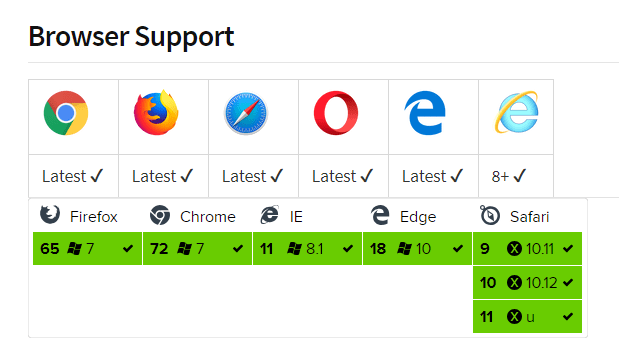
that works in both the browser and the Node.js environment. The
advantage (compared to the
fetch() method above) is that, unlike
the Fetch API,
axios
works well in IE11. You can check for the supported browsers
here.
Install the package using npm.
npm install axios --save
Import it into the component where you intend to make the HTTP request.
import axios from 'axios';
As recommended in React, we make the request inside
componentDidMount().
							class Users extends React.Component{
							  constructor(props) {
							    super(props);
							    this.state = {
							      users: []
							    }
							  }

							  componentDidMount() {
							  	axios.get('https://jsonplaceholder.typicode.com/users')
							  	 .then(response => response.data)
							  	 .then(users => this.setState({ users }))
							  }

							  render() {
							    return (
							      <div>
							        <ul>
							          {
							            this.state.users.map(usr =>
							              <li key={usr.id}>{usr.name}</li>
							            )
							          }
							        </ul>
							      </div>
							    );
							  }
							}

							export default Users;

The data (the JSON data we are looking
for) comes as a property in the response object along with other
properties like config,
headers,
request,
status and
statusText. That is why, unlike in the
fetch() method above, we use
response.data while making the
assignment in setState().
It is always a good practice to attach the
catch() handler.
							  componentDidMount() {
							  	axios.get('https://jsonplaceholder.typicode.com/users')
							  	 .then(response => response.data)
							  	 .then(users => this.setState({ users }))
							  	 .catch(err => console.log(err))
							  }